The Effects of Climate Change on Global Food Security Challenges and Biology Diagrams New Delhi: "Climate change is putting food safety at risk and action is needed to prepare the food system for the challenges ahead," according to the UN's Food and Agriculture Organisation (FAO). A recent FAO study, 'Climate change: Unpacking the burden on food safety,' highlights that climate change is threatening the safety of food - sourced from both land and sea, and outlines
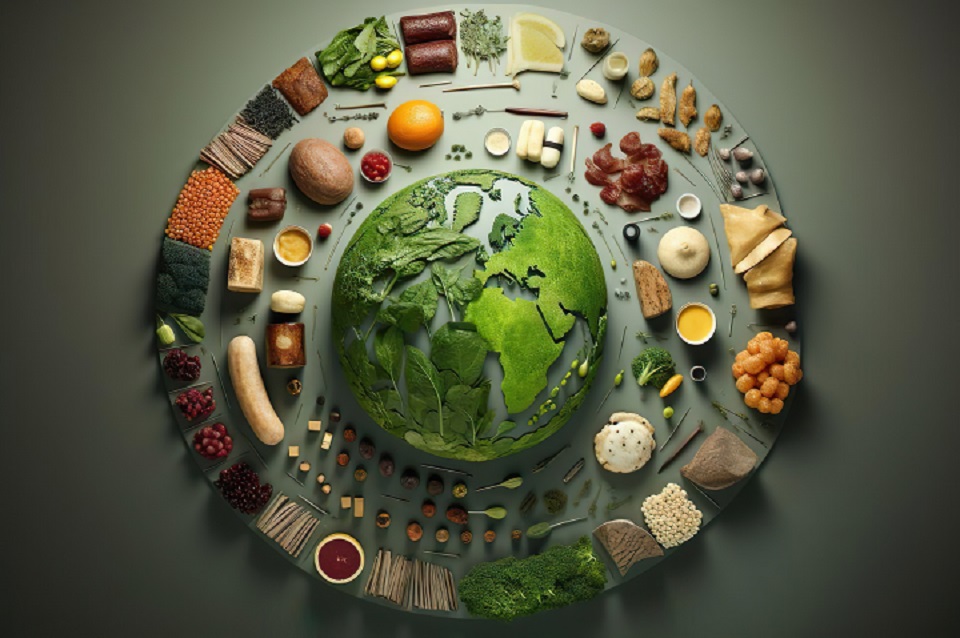
However, food systems are becoming increasingly exposed to disruptions from multiple sources, including social, political, and environmental stressors [5-7]. Agricultural production losses from extreme climate events that propagate as shocks through supply chain networks are a growing concern to food systems globally [8-11].

A Warming World: Impact of Climate Change on Food Security Biology Diagrams
They said it was needed because global food supply and demand is now getting to be what they called a "tragic mismatch." Collectively, the world is going to need to ramp up food production by 50 to 70% over the next two decades in order to feed 9.7 billion people by 2050. We're now closer to the year 2050 than we are to 1999.
A warming planet is pushing food prices upward as extreme weather disrupts the supply chain, with rising costs ultimately reaching consumers. What's happening? In 2024, fruit farmers warned that rising orange juice costs were coming after devastating floods in Valencia, Spain, which impacted crop yield and brought more than $200 million in damage.
_Mala_0.png)
Global warming poses threat to food chains Biology Diagrams
Here, is the basal species' mass and temperature-specific maximum growth rate, is the basal species' logistic growth term and is its population biomass density. The functional responses and describe the feeding dynamics of the feeding links in the food chain. The assimilation efficiencies (efficiency of conversion of prey biomass into predator biomass), and , are both set to 0.85 because both In urban areas, insufficient cold-chain capacity leads to frequent disruptions in the food supply chain, further increasing food waste. Another challenge is the strain on energy resources. Cold storage systems require significant electricity, but many Southeast Asian regions need help with energy access or face high costs for reliable power. Supply chain disruptions caused by COVID-19 are also partly responsible for pushing up food prices. "We have strong evidence that it's also linked to climate change and global warming
